
Brave Old Words
On soliloquy, expression, and artificial intelligence past and present.

This installment picks up where a previous one, Inside Hamlet’s Head, left off, and assumes familiarity with the earlier piece’s description of Andrew Scott’s delivery of Hamlet’s “To be or not to be” soliloquy.
We tend to study a soliloquy as a set piece, a fixed entity—an argument that dramatizes a conflict, say, or gives shape to an idea, or perhaps a self-portrait that, in the brushstrokes of its verse, reveals the features that envisage the fate of its speaker. Scott’s performance undoes this assumption, giving the momentum of the pentameters more than figurative pause, allowing us—compelling us—to hear the lines not as a script programmed with algorithmic confidence but as the uncertain surfacing of a stream of thought, a search for words to render pliable the intractable components of Hamlet’s quandary, a grappling with meaning rather than mere delivery of it. Indeed, even when spoken with headlong assurance, the speech is not interpretable exactly; it generates no clear message but creates a plexus of significance in which several purports converse, annotating and amplifying one another with no resolution but in expression. The mind of a soliloquist seems to concentrate rather than explain itself, even in Scott’s desultory voicing, until the verses vibrate with an energy as eerie and as evident as that which haunts an electromagnetic field.
We think of electricity as traveling through a cable, an understanding that is incomplete: while electrons do drift along their conductor in a current, the current alone cannot, say, light a lamp—that spark is summoned, more quickly than the electrons move, via the electric and magnetic field that the current stimulates and sustains around the wire. It is through the field that the energy lives and flows. So, too, with highly-charged language: verbal sense passes along the syntactical path of a sentence and in that passage activates a larger field of meaning than the words denote directly, unleashing senses stronger than plain parsing can isolate.
In If This Be Magic, his book about the tact of translators of Shakespeare working in an array of languages (French, Italian, Thai, Chinese, Japanese, Hungarian, Bulgarian, Dutch, and Turkish, among others—even Esperanto), Daniel Hahn at one point examines the work of Lawrence Flores Pereira. To find an apt equivalent, in Brazilian Portuguese, of the English blank verse that is the structural foundation of the plays, Pereira anchors to a twelve-syllable line, which, Hahn explains, allows him to maintain structure and semantic unity while accommodating the more expansive grammatical demands of the destination language. “I’m not making a transcription of Shakespeare’s rhythm,” Pereira says, “I just want to understand how it works, to give me a platform to reshape that in a different way, to produce effects.” Hahn goes on to explain:
So yes, Lawrence observes carefully that the twelve-syllable line allows for detailed mirroring, each half-line balancing the other . . . but actually, once he gets going, he forgets the counting entirely, and responds to the intelligence of the thing, and “the rhythmic effect it’s having on me”. The lines have movement, to which the translator is obsessively attuned.
“And responds to the intelligence of the thing” is a revealing acknowledgement of the way Shakespearean language works, especially in soliloquies: it creates its own intelligence that the lines enliven rather than describe. That intelligence is animated in rhyme, in rhythm, in wordplay and in metaphor as well as syntax; which is how, from a half-dozen one-syllable words—To be or not to be—a soliloquy can elaborate a latticework of apprehension and articulation that evokes a field of knowingness beyond the ken of the speaker forming words to explore it. The language is larger than the character and, in Hamlet’s case, embraces larger truths than the prince himself can measure up to; it’s how the revenge play he antically assumes his role in becomes a touchstone for meditation on fateful human truths and consequences.
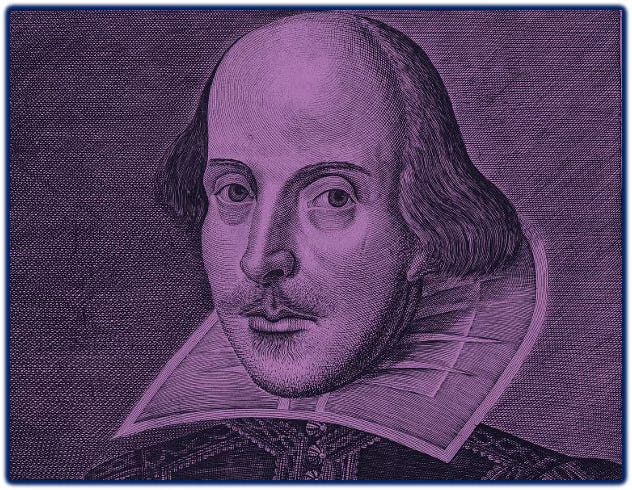
If this be magic, Shakespeare was master of it: he enabled, enacted, enshrined in verse the latent powers of language, the way words in combination carry their own wit, independent of, or rather in conversation with, a character’s or even a writer’s intent, how their discrete meanings are extended by the company they keep—a phenomenon that the uncanny outputs of AI’s large language models rely upon and elaborate in ways the math behind the systems can exploit but not entirely explain. If this tells us something about the nature of language, and how it reveals itself through structures of expression, it also suggests something about the nature of intelligence: might it be a phenomenon that discloses itself through structures of experience rather than a measurable human capacity, or the benchmarked computational prowess of a machine? Both language and intelligence harness, and expand, what biologist and complexity theorist Stuart Kauffman has called in other contexts the “adjacent possible,” described in turn by Steven Johnson, in his book Where Good Ideas Come From, as a “shadow future” of potential innovations a step away from a current state;1 or, in the case of writing, I would assert, potential meanings that hover a word or phrase away from what’s come before.
Think of how thoughts come to us. “It turns out that a lot of my so-called thoughts—a flattering term for these gossamer traces of mentation—are preverbal,” writes Michael Pollan in A World Appears, “often showing up as images, sensations, or concepts, with words trailing behind as a kind of afterthought—belated attempts to translate these elusive wisps of meaning into something more substantial and shareable.”2 That act of translation, mimed by Andrew Scott as he gestures the phrases of Hamlet’s most famous speech into being, is in a real sense what writing, writ large, is: each sequence of words spoken or set down upon a page reconfiguring the possibilities of what comes next, what’s within reach in the adjacent possible of adaptable meanings.
This may sound like a process LLMs automate—that is surely the belief of those who champion generative AI as a substitute for human composition. And for many kinds of writing that faith is more than credible: most human outputs are formulaic, often predictable in a probabilistic way by design. A résumé or a reference letter; an email promotion or a marketing pitch; a consultant’s report, from executive summary to analysis to recommendations, as well as much other business writing; term papers and critical essays, research reports, commencement speeches; news stories, social media posts, almost all media-centric communications—the majority of contemporary audience-facing verbiage is preconceived to be processed in portions well-served by the Veg-o-Matic-like (albeit turbocharged) slicing and dicing of LLMs. The outputs require predictable forms to serve their function.
But in the case of a writer fashioning language to expressive ends, function invents new forms, assuming shapes that didn’t quite exist before as it pursues the potential for what comes next—and what then is available in the lineaments of the language for future sentences to employ. Shakespeare’s corpus animates this rule with unparalleled vigor and virtuosity; but what we might apply to him as the apotheosis of verbal art in English applies also to Pollan in the quote above, filtering thoughts until they fall into words, and to me as I compose this sentence. We might apply it as well to a student transfixed by a blank page or screen as she wonders what to write about Hamlet, or how to represent in her journaling some element of experience that would not otherwise find its way into her head, or heart, as an object of contemplation or affection to accompany her into the world as a resource or a power (the internal echoes of expression are often more telling than an external audience can hear).
“Words are the most subtle symbols which we possess,” wrote Iris Murdoch in “The Idea of Perfection,” “and our human fabric depends on them. The living and radical nature of language is something which we forget at our peril.” Shakespeare is champion of that living and radical nature, conjuring phrases, even inventing words, with unmatched fecundity. While his plots, stripped to their essential progression of entrances, exits, and events, are seldom unorthodox, the actions they describe are viewed through a prism that articulates the subtlest and most illuminating colorings of human nature. That prism, of course, is his language.3
In his dramatic writing especially, Shakespeare exhibits what can best be described as a hands-on ingenuity in exploiting the exuberant irregularity and makeshift legacy of English, doubtless honed by the demands of theatrical deadlines and the always ad hoc nature of performance. In an essay exploring “the peculiar qualities of English,” Robert Graves and Alan Hodge once compared the “apparent chaos” of our language to “the untidiness of a workshop in which a great deal of repair and other work is in progress: the benches are crowded, the corners piled with lumber, but the old workman can lay his hand on whatever spare parts or accessories he needs or at least on the right tools and materials for improvising them.” No literary workman in the long history of our tongue has been as dexterous and versatile in this regard as Shakespeare. His toolbox, as inventoried by Ted Hughes, holds a uniquely large vocabulary, containing some 25,000 words, “more than twice as many as Milton, his runner-up.” A good number of them—amazement, bedroom, dwindle, dishearten, clangor, watchdog, obscene, swagger, to mention a few—if not invented by Shakespeare, found their earliest recorded usage in his lines. “If you search the OED for words used in print for the first time in Shakespeare’s Hamlet,” Louis Menand wrote in The New Yorker at the end of 2025, “you will get, amazingly, a hundred and seven results.”
This stock of words was in the service of a peerless gift for turning phrases. Shakespearean coinages by the hundreds have escaped their original confines to enter the language at large: sound and fury; the dogs of war; the time is out of joint; something wicked this way comes; to thine own self be true; screw your courage to the sticking place—it’s a foregone conclusion that the Bard was the be-all and the end-all of phrasemakers. His felicity beggars description. While some of these constructions even a blinking idiot will remember as Shakespearean—to be or not to be; neither a borrower nor a lender be; the winter of our discontent; what light through yonder window breaks—others are by now so common that even the learned may be surprised to discover whose quill first memorialized them: wild-goose chase; breathe life into a stone; strange bedfellows; fair play; he hath eaten me out of house and home; more in sorrow than in anger; a dish fit for the gods. To read Shakespeare is to tour a veritable factory of the English language and watch its most beautiful and durable products being made.
This unfettered inventiveness gives his texts a moment-by-moment energy that is exhilarating if you are intrepid in embracing it. The language feels emergent rather than engineered, not only because of the pragmatics of performance and despite the fact it is so consciously and playfully made. Unpredictable and improbable, even at the time of its writing (following Marlowe’s lead,4 Shakespeare pushed the poetry of the Elizabethan playhouse into new dimensions of audience enthrallment), it is alive with an agency that requires the kind of attention a creature might demand, which is not the least reason it has lived so long.
Of course, it would be silly to transfer Shakespeare’s singularity to the act of writing broadly, but the perceived threat to writing’s future posed by generative AI emboldens me to deepen consideration of writing as a technology in its own right, an affordance of the imagination that broadens and extends the faculties of consciousness, inspiring new capacities by its workings. Writing alerts us to the intelligence lurking in the world by activating it via words in search of meaning; the fabricative qualities of its artifice are its essence and virtue. “To say writing is artificial is not to condemn it but to praise it,” wrote Walter J. Ong in Orality and Literacy:
Like other artificial creations and indeed more than any other, it is utterly invaluable and indeed essential for the realization of fuller, interior, human potentials. Technologies are not mere exterior aids but also interior transformations of consciousness, and never more than when they affect the word. Such transformations can be uplifting. Writing heightens consciousness. Alienation from a natural milieu can be good for us and indeed is in many ways essential for full human life. To live and to understand fully, we need not only proximity but also distance. This writing provides for consciousness as nothing else does.
We read the world to find our way in it, but to be fully present we must also write it. That’s the promise of literacy: a heightened alertness to the contexts we pass through and an empowered capacity to handle, hold, and conjure meaning from them. If both reading and writing here stand as metaphorical emblems of processes that shape and motivate the self, guiding it along life’s uncertain paths, they also represent ways and means to initiate and sustain those processes, which is why they have been core elements of educational theory and pedagogical practice for so long that we regard them as givens. But they may not be givens for much longer; the advent of ChatGPT, and its prevalence among students in particular, has led many to fear their time is up.
“What you’re taking for granted,” Hugh Kenner wrote, “is always more important than whatever you have your mind fixed on.” The line appeared in an obituary for Kenner’s erstwhile teacher, Marshall McLuhan, and represented for the former student the principle by which McLuhan attended to modernity. In this current moment of AI frenzy, our collective mind is fixed on the coming thing and eager to overlook what it is overwriting. In a separate piece on McLuhan, Kenner would name what obsessed that thinker, then three years dead: “the effect of the mere availability of new media on people’s sense of who and what they are.” We are in the maelstrom of such an effect, its force multiplied to orders of magnitude since a new medium, not only available but ubiquitous, threatens to erase the very sources of our sense of who and what we are: reading and writing and the minds they made. And still make, by nourishing the longest and most important soliloquy we’ll ever know: the stream of thought that flows inside our head morning, noon, and night, and from time to time finds its way into the wider world in words.
Perhaps, if we fix our minds less on talking to machines—and the undeniable wonder of their automatic, lucid, useful, seemingly endless stream of content—and more on the older, equally mysterious matter of talking to ourselves, we’ll find that the adjacent possible is not as AI dependent as the technology’s most fervent evangelists would have us believe. By sacrificing the subjective, malleable, ambiguous art of expression to the statistical assurance that gives the output of LLMs its unflappable swagger, do we diminish our ability to pursue any meaning that transcends what we can easily express, but which only words can point us toward, offering spells of comfort or consolation as they honor our confusions, thereby giving an honest presence to the anxious becoming that occupies our days? It is not that AI can have no place in that becoming, but rather that it has been delivered in products and on platforms that seem hell-bent on making the essence of it obsolete.
If it is meaning we pursue, the validation of statistical modeling offers little satisfaction to the spirit: the magnitude of measure it needs to prove its points are too distant from the proportions of experience. No matter the amount of data an LLM has trained on, the probability-based imperatives of tokenization—the mathematical graphing that underpins the prediction of the next likely word or phrase and that, amplified by a panoply of other tunings, galvanizes an AI chatbot’s oracular glibness—by definition limit the dimensions of the adjacent possible to what is statistically significant (and therefore, also by definition, eminently useful in most utilitarian and financial applications), while leaving unaddressed all the larger questions uncertainty of expression is better suited to explore. To be or not to be?
Shakespeare’s language—and by the legacy of letters, if not native genius, ours—teaches us that meaning is a made thing, most telling in the emergent quality of its never-ending making; it is not the province of the probable, but of uncanny and resourceful words that teach it to emerge by discovering rather than conveying it. At its most vital, literary language surprises experience, and us, with unforeseen felicity. All too often, and almost always when taken at face value, the language unspooled by LLMs amazes in a different way, with the coldly calculating seductiveness of its facility, a fathomless confidence that anticipates a user’s needs and meets them at every turn with a virtuosic orchestration of probabilities. The magic of probabilistic thinking, Benjamin Recht has written, is that it allows us to trade in particulars for expectations.5 When it comes to language, such thinking fuels output rather than expression; the statistical assurances that nourish LLMs preclude particularity of voice or vision. They alter the essence of human articulation by scaling it beyond its origins in the emergency of utterance, the unexpectedness by which a stream of thought is wooed into words, or a phrase plucked from the adjacent possible that reading and reflection cultivate.
Our lives remain particular despite our best efforts to crowdsource them, and the language by which we give them meaning craves significance beyond the statistical. It is our quandary that we are each statistically insignificant, a poor player strutting and fretting an hour upon the stage, yet still cursed—or is it blessed?—with the urgent need, amidst a lifetime’s sound and fury, to be signifying something.
In the welcome to his Substack, named Adjacent Possible, Johnson writes:
I should probably explain what I mean by the “adjacent possible” given its prominence here. The adjacent possible is a term coined many years ago by one of my intellectual heroes, the complexity scientist Stuart Kauffman; it was the title of an opening chapter in my book Where Good Ideas Come From, and I’ve found over the years that people gravitate to the idea, even though at heart, it is a relatively simple concept. In any system that is evolving over time—whether it’s a biological system or a cultural one—at any given point in that evolution, there are a finite set of ways that the system can be changed, and a much larger set of changes that can’t be made. Think of the pieces of a chessboard halfway through a game of chess: there are a finite set of moves that are possible at that moment of the game, given the rules of chess, and a much larger set that can’t be made. The set of moves that you can make define the adjacent possible at that moment in the game.
I wrote about Pollan’s book at length a couple of posts back: On Minds, Prepositions, Moods.
The writing here and in the two paragraphs that follow borrows from my discussion of Shakespeare’s work in 1,000 Books to Read Before You Die.
See my Inside Hamlet’s Head for a bit more on this.
See Recht’s recently published book, The Irrational Decision.